
Ever stood in the middle of a grocery store aisle—or scrolled endlessly through an online delivery app—staring at bags labeled “Chana Dal” and “Split Chickpeas,” wondering if you’re looking at two different things or just fancy marketing?
If you’ve ever tried following an authentic Indian recipe or an international food blog and felt completely lost by the terminology, you are definitely not alone. Kitchen grocery confusion is real, especially when direct English translations meet traditional Indian dal varieties.
When comparing chana dal vs split chickpeas, are they actually the exact same grocery item, or will using one instead of the other ruin your Sunday tadka dal?
Here is everything you need to know about these two staples, including their biological roots, how they behave in a pressure cooker, how to substitute them, and how to shop like a seasoned pro at the supermarket.
Quick Answer for Confused Shoppers: Are They the Same?
The Short Answer: Yes, but with a slight twist. In 95% of grocery stores, “Chana Dal” and “Split Chickpeas” refer to the exact same ingredient. Both come from splitting and skinning the dark, small chickpea variety known as Bengal Gram (Cicer arietinum).
However, the confusion arises because Western supermarkets sometimes mistakenly label yellow split peas (which come from field peas) or split white chickpeas (Kabuli Chana) as “split chickpeas.”
| Term / Grocery Label | Botanical Name | What It Actually Is | Common Indian Name |
| Chana Dal | Cicer arietinum (Desi) | Split, skinned brown/black chickpeas | Chana Dal (चना दाल) |
| Split Chickpeas | Cicer arietinum (Desi) | English translation for Chana Dal | Chana Dal / Bengal Gram |
| Yellow Split Peas | Pisum sativum | Split field peas (A completely different pulse!) | Matar Dal (मटर दाल) |
| Split Kabuli Chana | Cicer arietinum (Kabuli) | Split large white garbanzo beans | Split Garbanzo |
If the package says “Split Bengal Gram” or “Chana Dal,” you are holding the authentic Indian ingredient. If it says “Yellow Split Peas,” step away—that is a totally different legume!
What is Chana Dal? (The Indian Pantry Powerhouse)
To understand what makes this pulse unique, let’s take a look at how it’s made. Chana Dal is produced by dehulling (removing the dark outer skin) and splitting Kala Chana (black or brown chickpeas).
Unlike the large, creamy-white chickpeas you see in salad bars (Kabuli Chana), the seeds used for chana dal come from the Desi chickpea variety. These seeds are smaller, darker, rougher, and packed with a higher concentration of fiber.
In Indian home cooking, chana dal holds a sacred position:
- Nutritional Profile: It has a low glycemic index (GI of around 8–11), making it exceptional for blood sugar control. It is also loaded with plant-based protein, iron, and dietary fiber.
- Flavor Profile: Nutty, sweet, and rich with a firm bite.
- Texture: Unlike Toor Dal (arhar) or Moong Dal, which break down into a smooth mush when boiled, chana dal holds its distinct shape even after being thoroughly cooked, unless you explicitly mash it.
What are Split Chickpeas? Understanding the Translation
The term “Split Chickpeas” is primarily an English translation created for international shoppers. Because the word “dal” translates to split pulses or lentils, Western exporters and food brands started translating Chana Dal as Split Chickpeas or Split Bengal Gram.
However, here is where global grocery shopping gets tricky:
- The White Chickpea Misunderstanding: In North America and Europe, “chickpea” almost exclusively means the large white Kabuli chickpea (Garbanzo bean). When Western shoppers hear “split chickpeas,” they picture split white garbanzo beans. While split garbanzo beans do exist, they are rarely sold in standard Indian grocery stores.
- The Yellow Split Pea Trap: Supermarket chains frequently confuse yellow split peas (Pisum sativum) with split chickpeas (Cicer arietinum). Yellow split peas cook much faster, have a flatter shape, lack the rich nutty flavor of chana dal, and turn mushy very quickly.
When navigating chana dal vs split chickpeas at your local kirana store or supermarket, always inspect the clear window on the packet:
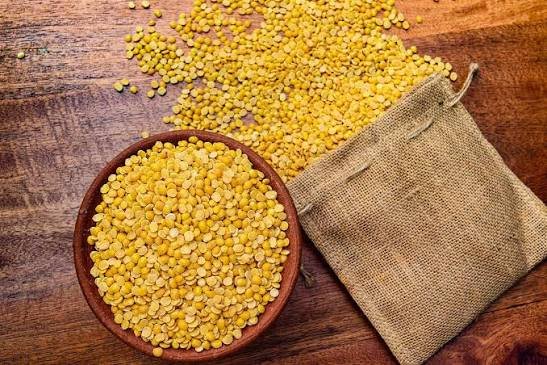
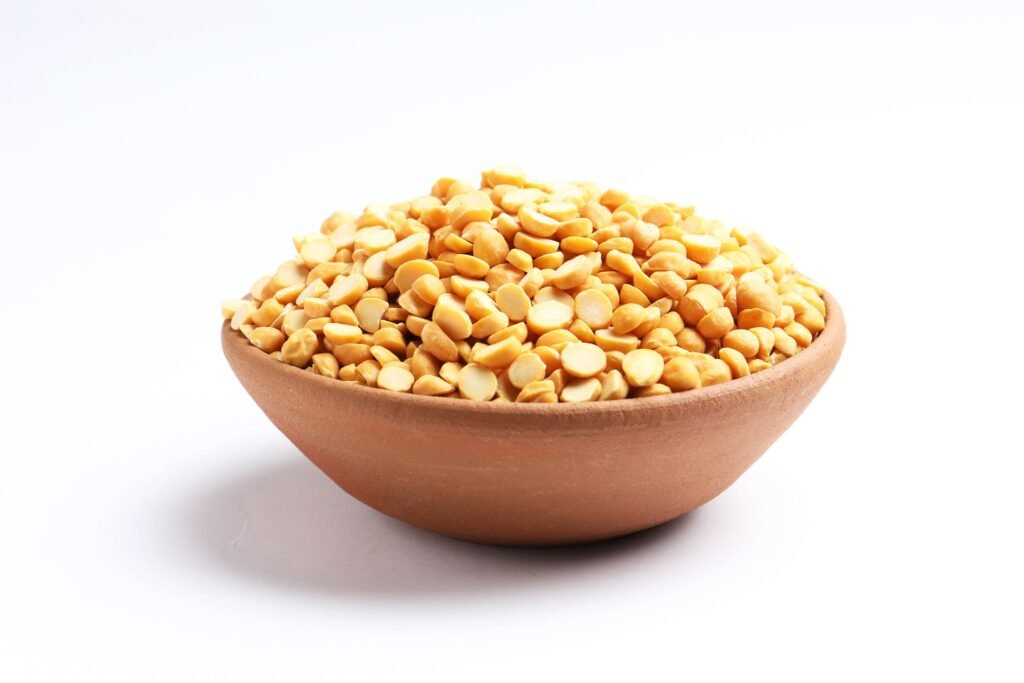
- True Chana Dal / Split Chickpeas: Slightly rounded, thick, bright yellow with a subtle dull sheen, and a noticeable sweet-nutty aroma.
- Yellow Split Peas: Flat, pale yellow, and smoother around the rim.
Chana Dal vs Kabuli Chana vs Kala Chana: What’s the Difference?
It is easy to get confused because all three belong to the Cicer arietinum plant family. However, their culinary uses, shapes, and textures could not be more different!
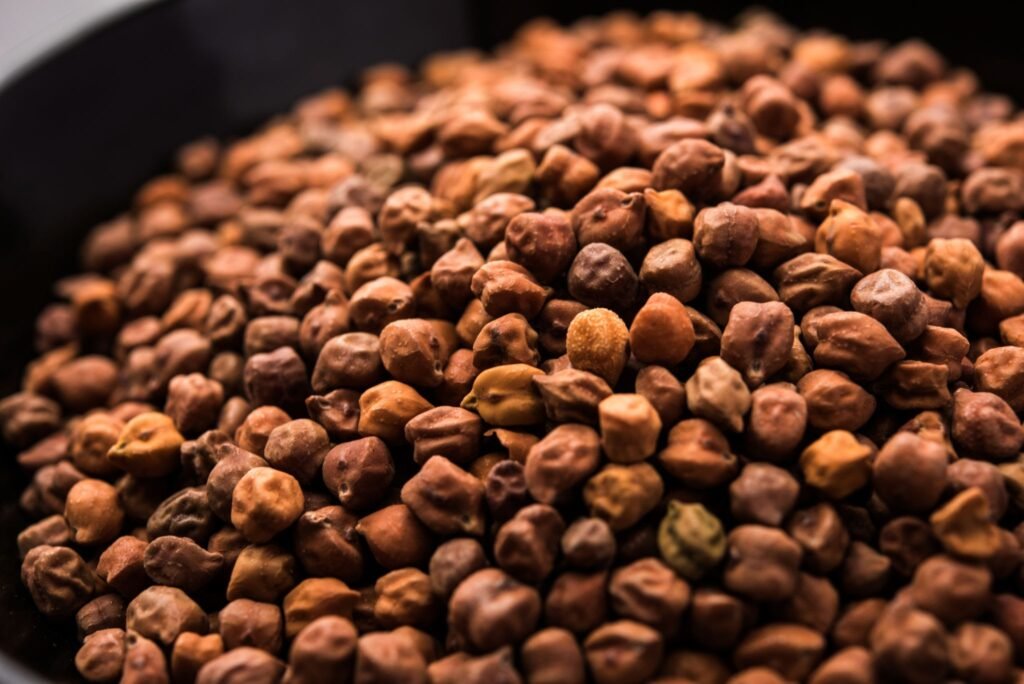
1. Kala Chana (Whole Desi Chickpeas)
This is the parent ingredient of chana dal! It is a small, hard, dark brown or black chickpea with a thick outer seed coat.
- Used for: Kala Chana Masala, Sookha Chana for Ashtami pujas, sprouted salads, and Kala Chana Soup.
- To make Chana Dal: The dark outer hull of Kala Chana is mechanically milled off, and the interior cotyledons are split in half.
2. Kabuli Chana (White Chickpeas / Garbanzo Beans)
These are large, beige, smooth-skinned chickpeas originated in the Mediterranean and Kabul region.
- Used for: Amritsari Chole, Hummus, Mediterranean salads, and falafel.
- How it compares: Kabuli chana has a creamy, buttery texture when cooked. It cannot be easily swapped for chana dal in dry stir-fries (sundal) or crunchy snacks (dal moth) because its starch structure is entirely different.
3. Chana Dal (Split Desi Chickpeas)
The split, skinless version of Kala Chana.
- Used for: Dal Tadka, Puran Poli, Chana Dal Vada, chutney bases, and Besan (gram flour).
Here is a quick reference breakdown:
[ Kala Chana (Whole Brown Chickpea) ]
                 │
                 ├── Dehull (Remove outer skin)
                 └── Split into halves
                 │
                 ▼
[ Chana Dal / Split Chickpea ] ── Grind down ──► [ Authentic Besan / Gram Flour ]
Cooking Time Difference: Pressure Cooker vs Open Pot
One of the most crucial culinary distinctions when evaluating chana dal vs split chickpeas (and their closest substitutes) comes down to cooking times. Because chana dal is a hard legume, it takes considerably longer to break down than lighter pulses like Moong or Masoor.
Soaking Times (The Game Changer)
- Without Soaking: Takes 6–8 whistles in an Indian pressure cooker (or 45–50 minutes boiling in an open pot).
- Soaked for 30–60 Minutes: Takes 3–4 whistles in a pressure cooker (or 25–30 minutes in an open pot).
- Soaked Overnight: Perfect for grinding into batter for vadas, dhokla, or chilla.
Cooking Comparison Table
| Pulse Variety | Soaking Time | Pressure Cooker Whistles | Instant Pot (High Pressure) | Texture Result |
| Chana Dal (Split Chickpea) | 30–40 mins | 3–4 Whistles | 12–15 mins | Holds shape, dense, earthy |
| Yellow Split Peas | None needed | 2 Whistles | 6–8 mins | Mushes easily, soft |
| Whole Kala Chana | 8 Hours | 6–8 Whistles | 25–30 mins | Chewy skin, firm interior |
| Kabuli Chana (Garbanzo) | 8 Hours | 5–6 Whistles | 20–25 mins | Creamy, soft, buttery |
Kitchen Tip: Always add a pinch of turmeric (haldi) and a drop of mustard oil or ghee to the pressure cooker when boiling chana dal. The oil prevents the starch water from frothing over the whistle, while turmeric aids digestion and gives it that gorgeous golden color!
Best Indian Recipes for Chana Dal
Chana dal is arguably the most versatile legume in the entire Indian kitchen. Because it retains its structural integrity, it works across appetizers, main courses, breakfast items, and traditional festival sweets.
1. Dhaba-Style Chana Dal Tadka
Nothing beats a piping hot bowl of dhaba-style chana dal served with ghee-brushed tandoori roti or steamed jeera rice. Slow-cooked with tomatoes, ginger, green chilies, and tempered with a sizzling tadka of cumin, dry red chilies, and hing (asafoetida).
2. South Indian Chana Dal Vada (Masala Vada)
Coarsely ground soaked chana dal mixed with finely chopped onions, curry leaves, fennel seeds, and green chilies, deep-fried until golden-crisp. Perfect for rainy evening tea times!
3. Puran Poli (Sweet Flatbread)
In Maharashtra and South India (Obbattu / Holige), cooked chana dal is mashed and simmered with jaggery (gur), cardamom, and nutmeg to make a rich sweet filling stuffed inside whole wheat dough.
4. Tempering and Chutney Base
In South Indian cooking, a tablespoon of dry chana dal is sizzled in hot oil along with mustard seeds and urad dal to give a crunchy, nutty bite to Upma, Poha, Lemon Rice, and coconut chutneys.
Can You Substitute Chickpeas or Yellow Split Peas for Chana Dal?
What if your local grocery store is completely out of chana dal, or you are stuck cooking in a kitchen abroad? Let’s examine how common substitutes measure up when comparing chana dal vs split chickpeas alternatives.
   [ Need Chana Dal? ]
          │
          ├── Yellow Split Peas ──► YES (Best visual & texture match for gravies)
          ├── Whole Kabuli Chana ─► NO  (Too large & creamy; ruins texture)
          ├── Toor Dal / Arhar ───► YES (Good for simple dal, but mushes quicker)
          └── Canned Chickpeas ───► NO  (Great for salads/curries, bad for dal)
Can you use Yellow Split Peas instead of Chana Dal?
Yes, with minor tweaks. Yellow split peas look identical to chana dal at first glance. However, they cook much faster and turn soft quickly.
- Adjustment: Reduce your pressure cooking time by at least 40%. Do not soak them prior to cooking, or they will turn into porridge!
Can you use Canned Whole Chickpeas instead of Chana Dal?
No, for traditional dals or vadas. Whole canned chickpeas (Kabuli) are already fully cooked and softened. If you try to mash canned chickpeas to make Masala Vada or Puran Poli, the batter will contain too much moisture and fall apart during frying. However, you can use them to make a quick Chole-style curry.
Can you substitute Toor Dal (Arhar Dal)?
Yes, for everyday dal. If you are making a basic comfort meal to pair with rice, Toor dal or yellow Moong dal can easily step in, though you will miss the distinct nutty bite of chana dal.
How to Store Chana Dal to Prevent Pests
In Indian households, keeping pulses fresh and free from moisture or grain weevils (sursooli) is an essential skill. Because chana dal contains natural starches and proteins, raw dry dal can attract insects if stored improperly.
Here is how to store your chana dal for up to a year:
- Air-Tight Glass or Steel Containers: As soon as you open your grocery bag, transfer the dal into a thoroughly dried glass jar or heavy-duty stainless steel container (dabba). Avoid storing dal in plastic bags after opening.
- Add Dried Neem Leaves or Bay Leaves: Drop 3–4 clean, dry bay leaves (tej patta) or dried neem leaves into the jar. Their natural oils act as an organic insect repellent without affecting the flavor of the dal.
- Keep Away from Moisture: Never insert a damp spoon into your dal container. Moisture is the number one cause of mold growth and pest infestation.
- Sun Drying (The Dadi-Nani Hack): If you buy chana dal in bulk (5 kg to 10 kg bags), spread the raw dal on a clean cotton sheet in direct sunlight for 3–4 hours once every three months. This removes latent moisture and keeps it fresh indefinitely.
Buying Tips: Polished vs Unpolished Dal
When browsing the pulse section on websites like Grocery Bazaar or at your local supermarket, you will likely notice two distinct variations: Polished Chana Dal vs Unpolished Chana Dal.
Which one should you put in your shopping cart?
Polished Chana Dal
Polished dal undergoes an artificial treatment process using oil, water, or oil-and-leather polish to give the lentils a shiny, smooth, uniform yellow appearance.
- Pros: Looks visually attractive on display shelves.
- Cons: The polishing process strips away natural fiber, nutrients, and essential minerals. It takes longer to cook and often lacks natural aroma.
Unpolished Chana Dal (Recommended!)
Unpolished dal is processed naturally without synthetic polishing agents, chemical treatments, or added oils.
- Pros: Retains its full nutritional profile, natural fiber, and authentic nutty flavor. Cooks faster and absorbs spices much better.
- Cons: May look slightly dull or dusty in appearance.
Grocery Verdict: Always choose Unpolished Chana Dal. It is healthier, cooks evenly, tastes far superior, and gives you the authentic Indian home-cooked flavor!
Frequently Asked Questions (FAQs)
1. Is chana dal the same as yellow split peas?
No! While they look very similar, chana dal comes from split brown chickpeas (Bengal gram), whereas yellow split peas come from field peas (Pisum sativum). Chana dal has a lower glycemic index, a nuttier flavor, and takes longer to cook than yellow split peas.
2. Is chana dal keto-friendly?
While chana dal has a low glycemic index and is high in dietary fiber, it contains approximately 50–60 grams of carbohydrates per 100 grams. Therefore, it is generally not suitable for strict keto diets, though it is excellent for diabetic and weight-management meal plans.
3. Can I grind chana dal at home to make Besan?
Yes! You can dry-roast unpolished chana dal in a pan for 2–3 minutes until warm, let it cool completely, and grind it in a high-powered mixer-grinder to make fresh, aromatic homemade besan (gram flour).
4. Why is my chana dal remaining hard even after pressure cooking?
Chana dal remains hard primarily due to three reasons: not soaking it for at least 30 minutes before cooking, using old/expired stock, or cooking it in hard water. Adding a tiny pinch of baking soda can help soften hard water during boiling.
5. Are split chickpeas good for weight loss?
Yes! Split chickpeas are packed with protein and dietary fiber, which promote satiety and keep you full for longer periods. This helps prevent overeating and spikes in blood sugar.
Final Takeaway: Navigating the Grocery Aisle
Next time you spot a bag of chana dal vs split chickpeas on the shelves of your favorite grocery store, you can shop with 100% confidence. Remember:
- Chana Dal = Split Bengal Gram = Split Chickpeas.
- Check the label to make sure you aren’t buying Yellow Split Peas by mistake.
- Opt for Unpolished Dal for maximum nutrition and authentic flavor.
- Soak your dal for 30 minutes before cooking to get that perfect dhaba-style consistency!
Happy cooking, and don’t forget to stock up on pure unpolished lentils for your next culinary adventure on Grocery Bazaar!
See Also
Chana Daal (Split Chickpea Lentils) Recipe | Vegan/Vegetarian Recipe
Making Chana Dal (Split Chickpea Lentil Curry) for Lunch
Sooji vs Rava vs Semolina: What Should You Buy for Upma, Halwa and Idli?
Kashmiri Chili Powder vs. Regular Red Chili Powder: The Ultimate Kitchen Swap Guide