
We have all been there. You are right in the middle of cooking a beautiful, aromatic Indian dinner. The onions are perfectly caramelized, the ginger-garlic paste is sizzling beautifully in the oil, and the tomatoes have just softened into a rich, luscious paste. You open your spice box to add that crucial kick of heat, only to realize your jar of regular red chili powder is completely bone-dry. Question – Can I use kashmiri chili powder instead of Regular Chili Powder?
But wait! Right at the back of your cupboard, you spot a bright, attractive packet of Kashmiri chili powder staring back at you.
You pause, holding the spoon over the hot pan. A wave of panic hits you. “Can I use kashmiri chili powder instead of regular chili powder? Will it make my food completely bland? Or worse, will it turn my curry into a fiery volcano that burns my family’s tongues?”
In the colorful world of Indian spices, red chili powder isn’t just a single generic ingredient. It is a vast spectrum of heat, color, and flavor. Making a blind swap can completely alter the destiny of your dish—either turning a mild, gorgeous Butter Chicken into a tear-inducing challenge, or rendering a fiery Kolhapuri rassa totally sweet.
Today, we are going to break down the science of the chili swap, look at how heat and color work together, and give you an exact mathematical substitution formula so you can confidently save your dinner without ruining your favorite recipes.
The Golden Rule of the Chili Swap
Let’s solve your immediate kitchen crisis with a definitive answer right off the bat:
The Golden Rule: Yes, you can absolutely use Kashmiri chili powder instead of regular chili powder! However, because their heat profiles are wildly different, you cannot do a straight $1:1$ swap. You must adjust your quantities carefully based on which way you are switching.
If a recipe calls for regular chili powder and you swap it with Kashmiri chili powder in the exact same amount, your food will look incredibly beautiful and bright red, but it will lack that distinct, throat-warming punch of heat.
Conversely, if a recipe asks for Kashmiri chili powder (expecting a mild, sweet warmth) and you throw in a full tablespoon of regular hot Indian chili powder, your dish will become overwhelmingly spicy, potentially sending your dinner guests scrambling for a glass of cold milk!
To understand why this happens, we need to look at what makes these two staples of the Indian spice box so drastically different.
Heat vs. Color: The Tale of Two Chilis
The difference between these two powders comes down to two major elements: Capsaicin (which controls the fire level) and Carotenoids (the natural pigments that control the deep red color).
Regular Red Chili Powder (The Firecracker)
Regular Indian red chili powder is typically milled from highly pungent pepper varieties like Guntur chilis (from Andhra Pradesh) or Teja chilis. These peppers are biological powerhouses of capsaicin. Their primary job in an Indian curry is to inject sharp, immediate, tongue-tingling heat. They have a relatively low pigment profile, meaning they give your food a warm, muted orange-brown hue rather than a dramatic crimson red.
Kashmiri Chili Powder (The Visual Showstopper)
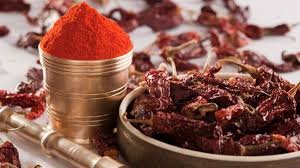
True Kashmiri chili powder is made from specialized, wrinkly peppers natively grown or traded through the cooler regions of Northern India. These chilis are bred specifically for their gorgeous, deep-toned skin. They are incredibly low in capsaicin but packed with natural red pigments. When ground up, they look like bright ruby-red dust. They give food that iconic, upscale “restaurant-style” red glow without adding intense pain to your palate.
To put this into a visual context that search engines and home cooks can understand at a glance, let’s look at where these two sit on the international standard scale for spice heat—the Scoville Scale:
| Chili Type | Scoville Heat Units (SHU) | Color Intensity (Visual Impact) | Primary Flavor Note |
| Kashmiri Chili Powder | 1,000 to 2,000 SHU (Extremely Mild) | Vibrant Ruby Red / Intense Crimson | Sweet, smoky, mildly fruity, gentle warmth |
| Regular Red Chili Powder | 30,000 to 50,000+ SHU (High Heat) | Dusty Orange-Brown / Dark Rust | Sharp, stinging heat, direct pungency |
As you can see from this breakdown, regular red chili powder can be up to 30 times hotter than mild Kashmiri chili powder! This massive gap is exactly why a blind $1:1$ substitution creates so much chaos in beginner recipes.
The Universal Substitution Formula
To make your kitchen life completely foolproof, we have converted this heat gap into an easy-to-use mathematical rule of thumb. Bookmark this formula for the next time you are standing over a simmering pan:
[ Swapping Regular FOR Kashmiri ] ──> Use 1.5x to 2x the amount + Add Black Pepper for heat

[ Swapping Kashmiri FOR Regular ] ──> Cut amount in HALF + Use Tomato/Paprika for color
Let’s break down both directions of the swap so you know exactly how to handle your measurements:
1. You need Regular Chili, but you only have Kashmiri
If your recipe calls for 1 teaspoon of regular red chili powder to give the dish a solid kick of heat, you need to compensate for Kashmiri’s mild personality.
- The Adjustment: Use $1.5 \times$ to $2 \times$ the amount of Kashmiri chili powder (i.e., 1.5 to 2 teaspoons).
- The Secret Pro-Tip: Because adding too much Kashmiri chili powder can introduce a slightly sweet, bulky pepper flavor to your gravy, stop at 1.5 teaspoons and throw in a quarter-teaspoon of ground black pepper or a chopped fresh green chili to make up that missing back-of-the-throat heat!
2. You need Kashmiri Chili, but you only have Regular
This is the high-risk swap. If a recipe calls for 2 teaspoons of Kashmiri chili powder to give a dish like Tandoori Chicken or a Shahi Paneer its famous bright look, throwing in 2 teaspoons of regular Guntur chili powder will make it completely inedible for most people.
- The Adjustment: Cut the quantity strictly in half or down to one-third (use just 1/2 to 1 teaspoon of regular chili powder).
- The Secret Pro-Tip: To rescue that missing, beautiful vibrant red curry color without adding fire, mix your reduced regular chili powder with 1 to 1.5 teaspoons of mild sweet European Paprika or a splash of tomato paste. Paprika behaves almost identically to Kashmiri chili in terms of color and mild sweetness!
How This Swap Impacts Iconic Indian Recipes
Different dishes rely on these chilis for completely different reasons. Let’s look at how making this spice swap alters three classic profiles of Indian cuisine:
1. The Tandoori Marinade & Tikka Masala
Dishes like Chicken Tikka or a gorgeous Paneer Tikka Masala are famous worldwide for their jaw-dropping, bright red appearance. Restaurants traditionally achieve this look by using massive amounts of Kashmiri chili powder in the yogurt marinade.
- If you swap blindly: If you use regular chili powder to get that color, your spicy spicy tikka masala will become an agonizing endurance test. If you reduce the regular chili to save your tongue, your chicken will turn out a sad, muddy gray-brown color. To fix this, always use the regular chili + paprika combo mentioned above!
2. The Comforting Dal Tadka
A classic yellow Dal Tadka relies on a final splash of hot oil infused with spices poured over the lentils right before serving.
- If you swap blindly: If you drop regular chili powder into that final hot oil topping, it can quickly scorch, turning bitter and leaving your dal looking unappealingly dark. Kashmiri chili powder shines in a tadka—it blooms in hot ghee instantly, turning the top of your dal into a gorgeous, gleaming golden-red oil slick that looks incredibly appetizing.
3. Fiery Regional Curries (Vindaloo or Guntur Chicken)
These regional powerhouses are structurally built around intense, clearing-of-the-sinuses heat.
- If you swap blindly: If you try to make an authentic Goan Vindaloo using nothing but Kashmiri chili powder, your dish will look pitch-black-red and dramatic, but the taste will be incredibly flat, missing that sharp, vinegary, fiery punch that defines the entire culinary experience.
Summary Cheat Sheet for Emergency Substitutions
Print this out or screenshot this table to keep your kitchen baseline completely secure during frantic dinner prep:
| If the Recipe Asks For… | And You Only Have… | Use This Exact Amount Instead… | Bonus Adjustments Needed |
| 1 tsp Regular Chili | Kashmiri Chili | 1.5 to 2 tsp | Add a pinch of black pepper or 1 minced green chili for heat. |
| 1 tsp Kashmiri Chili | Regular Chili | 1/2 tsp | Add 1/2 tsp of sweet Paprika to keep the red color bright. |
| 2 tsp Kashmiri Chili | Regular Chili | 1 tsp | Mix with a tablespoon of tomato puree to mimic the thick body. |
| 1 tsp Regular Chili | Sweet Paprika | 1/2 tsp (Doesn’t work alone) | Paprika has zero heat. You must add cayenne or fresh green chilis. |
Conclusion: Mastering Your Indian Spice Box Staples
At the end of the day, neither of these red powders is inherently better than the other. They are simply two completely different tools designed for two different jobs inside your kitchen. Regular red chili powder is your functional firecracker—built to add punch, attitude, and structural heat to hearty, robust meals. Kashmiri chili powder is your elegant showstopper—engineered to deliver premium visual luxury, warmth, and a smooth flavor profile without causing physical discomfort.
The next time you find yourself stuck in the middle of a recipe with the wrong jar in your hand, don’t panic. Take a deep breath, recall our universal substitution formula, adjust your measuring spoons accordingly, and proceed with complete confidence. Your curry will turn out absolutely delicious, your family’s palates will be perfectly safe, and your kitchen confidence will hit an all-time high!
See Also
How to Use Kashmiri Chilli Powder | Add Colour & Flavour Without the Heat!
Minimalist Spice Rack: The Only 7 Spices an Indian Kitchen Beginner Needs