
If you have ever stood in the grocery aisle staring at two identical-looking packets—one labeled sabudana, one labeled sago, and another imported one called tapioca pearls—you are not alone! Most Indian households treat these names as interchangeable synonyms.
When Navratri fasting arrives or you get a sudden craving for sabudana khichdi, buying the wrong packet can turn your dish into a sticky, clumped disaster.
So, what is the actual truth behind sabudana vs sago vs tapioca pearls ? Are sabudana vs sago truly the same product, or are we eating two completely different botanical ingredients without knowing it? Let’s decode the origin, culinary uses, soaking secrets, and buying hacks so you always pick the exact packet your kitchen needs!
Quick Definition & Cooking Guide
What is Indian Sabudana?
Indian sabudana is almost always made from tapioca starch extracted from the roots of the cassava plant (Manihot esculenta). Although commonly translated as “sago” in Indian markets, true sago comes from the pith of sago palm trees (Metroxylon sagu). When you buy commercial sabudana in India, you are purchasing small, white, pearl-shaped tapioca starches that turn translucent, soft, and chewy when cooked.
Quick Ingredient-Origin Breakdown
| Ingredient Name | Botanical Source | Primary Origin / Region | Key Physical Feature |
| Indian Sabudana | Cassava Root Starch (Tapioca) | India (Salem, Tamil Nadu) | Opaque white pearls, uniform size |
| True Sago | Sago Palm Tree Pith | Southeast Asia (Indonesia, Malaysia) | Slightly off-white/brownish tint |
| Tapioca Pearls (Boba) | Cassava Starch + Caramel/Flavors | Taiwan / Global | Large, dark brown or translucent black |
“Use This For…” Quick Cooking Guide
- Use Medium Tapioca Pearls (Indian Sabudana) for: Non-sticky sabudana khichdi, sabudana vada, and crispy papad.
- Use Small Pearl Tapioca (Choti Sabudana) for: Creamy sabudana kheer, payasam, soups, and thick puddings.
- Use Large Black Tapioca Pearls (Boba) for: Bubble teas, cold dessert beverages, and Asian shaved ice treats.
1. Quick Answer: What Indian Sabudana is Usually Made From
When you head out to your local kirana store or order online from Grocery Bazaar, the white spherical pearls labeled “sabudana” are made from cassava root starch.
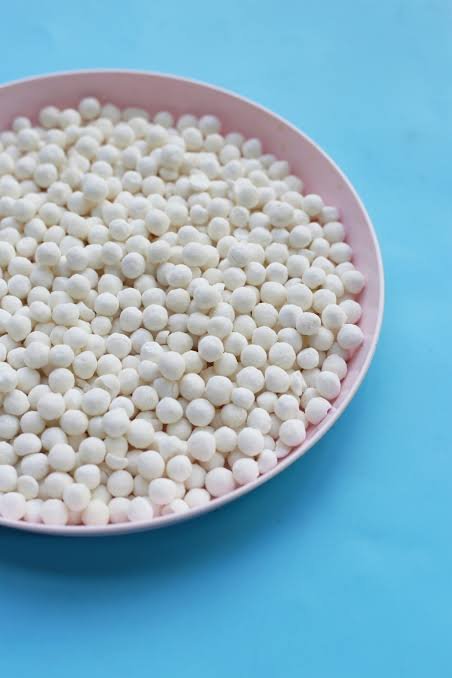
The cassava root is harvested, washed, crushed, and squeezed to separate its thick, milky starch from the fiber. This liquid starch is settled in large vats, dried into a pure white powder, and then mechanically rolled, granulated, and roasted into the glossy white pearls we see at home.
In India, over 80% of commercial sabudana production is concentrated in Salem, Tamil Nadu, where cassava (locally called Maravalli Kizhangu) grows abundantly. So, when comparing sabudana vs tapioca pearls, remember this key takeaway: Indian sabudana IS tapioca starch in pearl form.
2. What True Sago Is (And Why It Is Rare in India)
If Indian sabudana is made from cassava, then what is true sago?
True sago starch originates from the inner trunk pith of tropical palm trees, specifically the Metroxylon sagu tree native to Southeast Asian countries like Indonesia, Malaysia, and Papua New Guinea. To harvest true sago:
- Sago palm trees are felled just before flowering.
- The spongy inner trunk stem is rasped into a fine powder.
- The starch is washed out with water, filtered, and pressed into small granules.
True sago pearls have a slightly uneven shape, a brownish or off-white hue, and a distinct earthly aroma. Because sago palm trees take up to 7–12 years to mature, producing true palm sago is labor-intensive and expensive.
During the British colonial era, palm sago was imported into India. However, in the mid-20th century, indigenous processing of local cassava roots took over, replacing palm sago entirely while retaining the popular vernacular name sabudana (derived from the Persian word sabu or Hindi sabu meaning sago).
3. What Tapioca Pearls Are (From Sabudana to Boba)
The term tapioca pearls refers broadly to any round edible sphere created using starch extracted from the cassava plant root.
In international culinary terms:
- Small/Medium White Tapioca Pearls: These are identical to standard Indian sabudana. They are used in puddings, fruit soups, and South Asian desserts.
- Large Black Tapioca Pearls (Boba): Made popular by Taiwanese bubble tea, these large cassava pearls are mixed with brown sugar or caramel coloring to give them a dark brown appearance and a bouncy, chewy bite (QQ texture).
When evaluating sabudana vs tapioca pearls, the main difference lies in pearl size, food colorings, and cultural preparation. When uncooked, white tapioca pearls purchased at an Asian grocery store behave almost identically to Indian cooking sabudana.
4. Why Grocery Packets Use the Names Interchangeably
Why do Indian food manufacturers write “Sago / Tapioca Pearls / Sabudana” all on the same packet?
- Linguistic Tradition: In Indian regional languages (Hindi, Marathi, Gujarati, Bengali), the word sabudana (or sabudhan) has been used for decades to describe any white starch pearl used during vrat (religious fasting).
- Export & Import Labeling Rules: International trade regulations mandate that cassava-based starches must be declared as Tapioca. However, to cater to the Indian diaspora worldwide, brands add “Sabudana” and “Sago” to appeal to household shoppers.
- Consumer Recognition: Most shoppers do not search for “cassava root starch pearls”—they search for “sabudana.” Using all three terms ensures consumer clarity at the billing counter.
5. Comprehensive Comparison: Sabudana vs Sago vs Tapioca Pearls
Here is a side-by-side comparison to clear up any lingering confusion regarding sabudana vs sago and sago pearls vs tapioca pearls:
| Comparison Parameter | Indian Sabudana | True Sago | Commercial Tapioca Pearls | Taiwanese Boba |
| Primary Ingredient | Cassava Root Starch | Sago Palm Trunk Pith | Cassava Root Starch | Cassava Root Starch |
| Physical Appearance | Pure bright white, uniform spheres | Off-white, yellowish/brownish | Translucent to chalky white | Dark brown to deep black |
| Texture When Cooked | Soft, slightly chewy, gelatinous | Soft, lighter, dissolves easily | Soft, gelatinous, smooth | Highly elastic, dense, bouncy |
| Common Uses | Khichdi, Vada, Kheer, Vrat recipes | Soups, traditional Southeast Asian desserts | Puddings, Asian sweet soups | Bubble Milk Tea, iced beverages |
| Availability in India | Found in every local grocery store | Extremely rare, imported specialty | Found in supermarkets/Asian stores | Specialty boba shops & online |
| Fasting Appropriate (Vrat) | Yes (pure plant root) | Yes | Yes (if unflavored/uncolored) | No (usually contains additives) |
6. Which Product Works Best for Sabudana Khichdi?
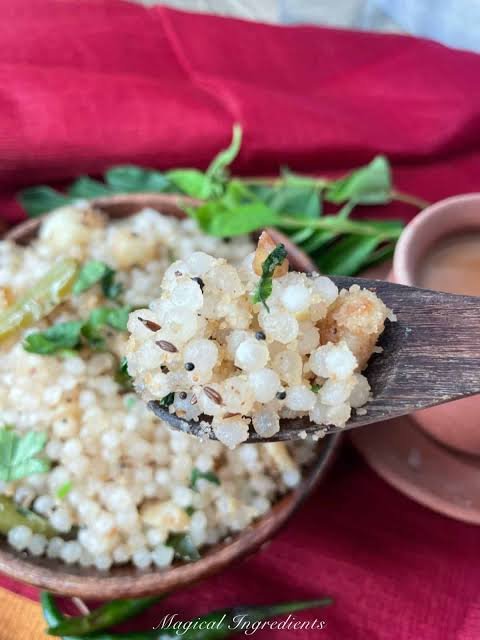
If your goal is to cook a bowl of non-sticky, perfectly bloomed sabudana khichdi, you must use medium-sized Indian sabudana (tapioca pearls).
Why Medium Sabudana Works
- Structural Integrity: Cassava starch holds its round shape during high-heat tempering (tadka) with ghee, cumin, and green chilies.
- Moisture Balance: When rinsed and soaked correctly, medium tapioca pearls absorb just enough water to soften their core without turning into a mushy paste.
Why True Sago or Boba Will Fail
- True Sago: Has a lower gelatinization temperature and breaks down quickly under direct flame heat, turning your khichdi into a sticky batter.
- Boba Pearls: Are far too large and dense; heating them in a skillet will cook the exterior while leaving the center raw and rubbery.
7. Which Product Works Best for Kheer and Puddings?
For desserts like Sabudana Kheer, Sago Payasam, or Mango Tapioca Pudding, you have a bit more flexibility:
- Small-Sized Sabudana (Choti Sabudana): Ideal for traditional kheer. Small tapioca pearls release just enough surface starch to thicken boiled milk into a rich, rabri-like consistency within 15 minutes.
- Standard Medium Sabudana: Works well, though it requires slightly longer cooking in milk so the core softens fully.
- True Palm Sago: If you manage to source authentic palm sago, it cooks quickly in coconut milk or sweetened dairy milk, creating a delicate, melt-in-the-mouth dessert texture.
8. How Pearl Size Affects Soaking and Cooking Times
Understanding the physical size of your pearls is the secret to avoiding cooking failures.
  Pearl Size & Water Requirements:

  [ Micro / Small Pearls ] ──> Wash thoroughly ──> Soak 30-60 mins  ──> Best for Kheer & Soups
  [ Medium Pearls (Khichdi) ] ──> Wash 3-4 times ──> Soak 4-6 hours   ──> Best for Khichdi & Vada
  [ Large Boba Pearls ]   ──> Do NOT soak       ──> Boil 20-30 mins ──> Best for Bubble Tea
- Small Pearls (1–2 mm): Require minimal soaking (30 to 60 minutes). They cook rapidly in boiling liquids.
- Medium Pearls (3–5 mm – Standard Sabudana): Require thorough washing followed by 4 to 6 hours (or overnight) of soaking. The water-to-pearl ratio during soaking must be kept at 1:1.
- Large Boba Pearls (6–8 mm): Do not soak raw boba pearls in cold water! They will dissolve into raw starch slurry. Instead, drop them directly into rolling boiling water and cook for 20–30 minutes before sweetening with sugar syrup.
9. How to Choose Good-Quality Sabudana at the Grocery Store
Not all sabudana packages are created equal. When shopping at your local store or ordering online from Grocery Bazaar, keep these quality checks in mind:
- Check for Whiteness and Shine: High-quality tapioca sabudana should look bright white and uniformly round with a smooth, glossy surface. Avoid bags containing broken granules, dusty white powder, or yellowish discoloration.
- Test the Hardness: Good raw pearls should be firm and difficult to crush between your fingers when dry. If the pearls crumble easily inside the bag, they have excess moisture or poor manufacturing quality.
- Sniff for Off-Odors: Pure cassava starch should be completely odorless. A sour or chemical smell indicates improper fermentation or washing during factory processing.
- Look for Salem Origin Labels: Sabudana manufactured in the Salem district of Tamil Nadu holds a registered Geographical Indication (GI tag candidate status) and is recognized nationwide for clean processing standards.
10. Common Soaking Mistakes (And How to Fix Them)
Soaking sabudana is where most home cooks run into trouble. Avoid these common mistakes:
- Mistake 1: Skipping the Initial RinseWhy it ruins your dish: Raw pearls are coated in fine loose surface starch. If you don’t wash it off, that surface starch turns into glue during cooking.The Fix: Rinse your pearls 3 to 4 times under cold running water until the drained water runs completely clear.
- Mistake 2: Drowning the Pearls in WaterWhy it ruins your dish: Filling the soaking bowl with too much water turns the pearls into soggy, wet mush that collapses when cooked.The Fix: Follow the “Finger-Joint Rule.” Add just enough water so it sits no more than 1/4 inch (about 0.5 cm) above the level of the leveled pearls.
- Mistake 3: Cooking Before Pressing TestWhy it ruins your dish: Cooking partially-soaked pearls leaves a hard, white center that stays chalky and raw.The Fix: Take a soaked pearl and mash it between your thumb and forefinger. It should smash easily without any hard, gritty core inside.
11. Storage and Shelf Life Guidance
Raw sabudana has an exceptionally long shelf life if stored properly:
- Uncooked Dry Sabudana: Transfer dry pearls out of their plastic grocery packaging into an airtight glass or food-grade plastic jar. Store in a cool, dark, and dry pantry. It stays fresh for up to 12 to 18 months.
- Soaked Sabudana: If you have soaked extra sabudana, drain any excess surface water, place it in an airtight container, and refrigerate. It remains fresh for 2 to 3 days. You can also freeze soaked pearls in a zip-lock bag for up to 1 month—just thaw them at room temperature before tempering!
12. Frequently Asked Questions (FAQs)
Is sabudana tapioca or sago?
In India, commercially sold sabudana is tapioca starch derived from the cassava root (Manihot esculenta). While it is commonly translated as “sago,” authentic sago comes from palm trees, which is rarely sold in Indian retail markets.
Is sabudana healthy for daily consumption?
Sabudana is a rich source of clean carbohydrates and energy, making it easy to digest and ideal for recovering after illness or during religious fasts (vrat). However, because it consists mostly of starch with low protein and fiber content, it is best eaten alongside protein-rich ingredients like roasted peanuts, yogurt, or fresh veggies.
Can I use tapioca pearls bought from an Asian supermarket for sabudana khichdi?
Yes! Small to medium uncolored white tapioca pearls found in Asian grocery stores are identical to Indian sabudana and can be soaked and cooked using the exact same khichdi recipes.
Is sabudana gluten-free?
Yes, sabudana is 100% naturally gluten-free because cassava root contains no gluten proteins. It is a fantastic grain-free alternative for individuals with celiac disease or gluten sensitivity.
Final Takeaway: What Should You Buy?
Now that the sabudana vs tapioca pearls debate is crystal clear:
- Grab a pack of Medium Indian Sabudana (Tapioca Pearls) if you want to make light, fluffy khichdi, crunchy vada, or savory papad.
- Pick up Small Pearl Sabudana if you are planning a thick, rich kheer or dessert payasam.
Happy cooking, and enjoy your perfectly bloomed, non-sticky sabudana dishes!
See Also
Sabudana :Tapioca Pearls Vs Sago Pearls
Tapioca Pearls VS Sago|Tapioca Flour VS Cassava Flour
Toor Dal vs Arhar Dal vs Pigeon Peas: Same Dal or Different ?
Besan vs Chickpea Flour vs Gram Flour: Are They Really the Same?