
Let’s be completely honest: as Indians, a meal without rice just doesn’t feel like a meal. Whether it is a comforting bowl of dal-chawal after a exhausting day at work, a festive weekend biryani, or a quick vegetable pulao, rice is the literal fuel of our households.
However, walk into the grocery store or open your favorite quick-commerce delivery app, and you are hit with a major dilemma. The two biggest contenders dominating the shelves are Sona Masoori and Basmati Rice.
Your fitness trainer tells you to watch your carbs. Your budget tracker warns you about grocery bills. Meanwhile, your mom insists that certain dishes simply demand a specific type of grain. You find yourself asking: when it comes to Sona Masoori vs Basmati rice for daily use, which one deserves a permanent spot in your kitchen container?
Choosing the right grain isn’t just about what looks pretty on the plate. It directly impacts your monthly kitchen budget, your fitness goals, your blood sugar levels, and how satisfied you feel after lunch. Today, we are putting both of these incredibly popular white rice varieties head-to-head to help you make the best choice for your family’s daily health and happiness.
The Verdict: Sona Masoori vs Basmati Rice for Daily Use (TL;DR)
If you are standing in the supermarket aisle right now and need a quick answer, here is the executive summary:
- Choose Sona Masoori if: You want an affordable, lightweight, low-starch grain for daily South Indian meals, rasam, sambhar, or simple dals. It is budget-friendly, lacks an overwhelming perfume, pairs effortlessly with liquid-heavy curries, and is ideal if you prefer shorter grains.
- Choose Basmati Rice if: You are cooking special meals like biryanis, pulaos, or fried rice, or if your priority is blood sugar management. Because high-quality aged basmati rice has a lower glycemic index, it digests slower, keeping you full without causing massive, sudden energy spikes.
Side-by-Side Comparison Table
To understand how these grains function differently on your plate and in your wallet, let’s look at their structural and economic differences side-by-side:
| Attribute | Basmati Rice (Aged Long-Grain) | Sona Masoori (Medium-Grain Staples) |
| Grain Length & Shape | Extra-long, slender needles; expands longitudinally when cooked. | Medium-short grain, oval-shaped, lightweight. |
| Aroma & Scent Profile | Highly aromatic; rich in the compound 2-acetyl-1-pyrroline (popcorn-like scent). | Neutral, mild, and natural; completely allows the curry flavor to dominate. |
| Texture When Cooked | Fluffy, distinctly separate grains; dry, non-sticky feel. | Soft, slightly tender, absorbs liquid quickly; mildly clump-prone. |
| Glycemic Index (GI) | 50 to 58 (Low to Medium); ideal for slow glucose release. | 70 to 75 (High); breaks down rapidly into glucose. |
| Average Cost (per kg) | ₹90 to ₹220+ (Premium pricing tier) | ₹55 to ₹85 (Highly economical daily staple) |
| Best Native Pairings | Rajma, Chole, Kadhi, Biryani, Pulao | Sambhar, Rasam, Curd rice, daily lentils |
Deep Nutritional Breakdown: Weight Loss & Blood Sugar Management
When weighing Sona Masoori vs Basmati rice for daily use, look beyond taste and analyze how your body processes each grain. Many people assume all white rice varieties are metabolically identical, but their macro structures tell a very different story.
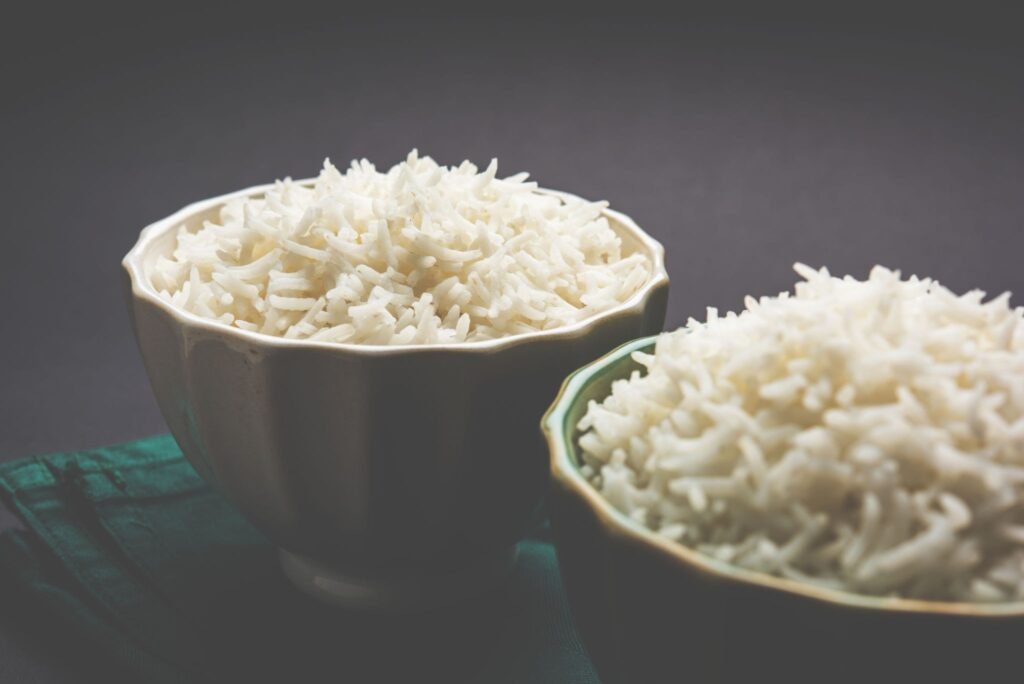
The Glycemic Index Factor (Diabetes & Energy Spikes)
The single biggest health differentiator here is the glycemic index of rice. The glycemic index (GI) measures how rapidly a carbohydrate-heavy food converts into glucose within your bloodstream.
- Basmati’s Secret Weapon: High-quality aged basmati rice contains a high ratio of a starch called amylose. Amylose is a long, straight molecule chain that takes a long time for your digestive enzymes to break down. Because of this, basmati has a low-to-medium GI rating (around 50 to 58). If you are managing diabetes, pre-diabetes, or trying to avoid that heavy, sleepy afternoon crash, basmati enters your bloodstream gradually, providing stable, sustained energy.
- Sona Masoori’s Composition: Sona Masoori is packed with amylopectin, a highly branched starch molecule that your body unzips and digests within minutes. It has a high GI rating fluctuating between 70 and 75. This means it causes a faster rise in blood sugar. If you lead a highly active lifestyle or work out heavily, this quick energy delivery is fantastic. But for sedentary desk jobs, it can lead to fat storage and early hunger pangs.
Calorie Comparisons and Weight Management
When looking at pure calories in south indian rice options, both grains sit neck-and-neck on paper. A 100g serving of uncooked grain delivers roughly 350 calories, 78g of carbohydrates, and about 7g of protein.
However, weight loss is driven by satiety (how full you feel after eating). Because cooked basmati expands dramatically in length without sticking together, a smaller raw quantity looks like a much larger, more satisfying volume on your plate. Sona Masoori stays compact, meaning you might accidentally scoop an extra half-katori onto your plate just to make it look full, inadvertently racking up your calorie intake.
The Ultimate Cooking Guide: Perfect Water-to-Rice Ratios
Have you ever ended up with a mushy paste instead of beautiful, fluffy grains? Rice cooking is pure science. Because these two options absorb water differently based on their starch composition, you need to adjust your liquid measurements carefully.
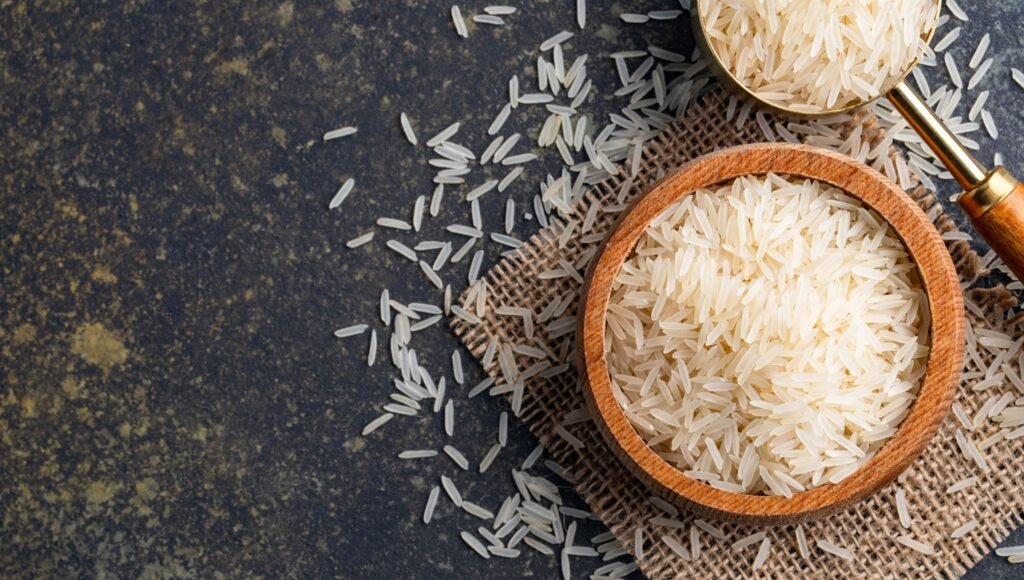
Here is your foolproof kitchen reference guide:
1. Cooking Basmati Rice (To Get Separated, Non-Sticky Needle Grains)
Basmati needs space and a strict water limit to prevent its delicate extra-long grain length from breaking apart.
- Pre-cooking step: Always soak basmati for 20 to 30 minutes in cold water before cooking. This allows the grain to absorb moisture evenly without curling or fracturing under high heat.
- Water Ratio Table for Basmati:MethodRatio (Rice to Water)InstructionsIndian Pressure Cooker$1 : 1.5$Cook for exactly 2 whistles on medium heat, then let the steam release naturally.Open Pot (Boil & Drain)$1 : 5$ (Abundant)Cook for 8-10 mins until 90% done, drain the excess water through a colander, and let it steam covered for 2 minutes.
2. Cooking Sona Masoori Rice (To Get Tender, Soft Daily Staples)
Sona Masoori is highly resilient and handles more water gracefully, yielding a soft, comfortably tender bite that easily holds onto gravies.
- Pre-cooking step: No long soaking required. Simply rinse the rice 2 to 3 times in a bowl to wash off any loose surface starch until the water runs clear.
- Water Ratio Table for Sona Masoori:MethodRatio (Rice to Water)InstructionsIndian Pressure Cooker$1 : 2.5$Cook for 3 whistles on medium flame. This ensures the center of the medium-grain is perfectly soft.Electric Rice Cooker$1 : 2.25$Drop ingredients in, switch to ‘Cook’ mode, and allow it to automatically switch to ‘Warm’. Let it sit for 5 minutes before fluffing.
Cultural and Culinary Dynamics: Which Grain Suits Which Dish?
Beyond the nutritional stats, there is a fundamental reason why regional Indian cooking utilizes both styles. They serve completely different culinary masters.
Why Sona Masoori Rules the Daily South Indian Meal
If you are eating a meal that features a liquid-heavy curry like traditional Rasam, Sambar, or a watery buttermilk Majjiga Pulusu, long-grain basmati is actually a terrible vehicle. The long, dry needles repel thin liquids, causing the curry to pool at the bottom of your plate.
Sona Masoori acts like a sponge. Its slightly starchy, open structure drinks up the tangy tamarind and spice juices of sambar, ensuring that every single morsel you scoop up with your fingers is completely saturated with flavor. It is also the supreme choice for making comforting Curd Rice (Thayir Sadam), as the grains break down easily when pressed, blending into a smooth, creamy texture.
Why Basmati Wins the Fragrant Feast Category
Conversely, try making a rich vegetable biryani or a classic North Indian Jeera Rice with Sona Masoori, and you will likely end up disappointed. Basmati is built for dry heat, ghee coating, and aromatic dominance.
The grains expand along their length rather than their width, meaning they glide past each other without bursting open and releasing sticky starches. It pairs beautifully with thick, rich, gravy-heavy profiles like Rajma Masala, Chole, or rich chicken and paneer dishes, standing tall against heavy spices without getting lost in the mix.
Summary Blueprint: Making Your Final Choice
To close out the debate once and for all, use this simple lifestyle rule of thumb to set up your pantry shelves:
                  [ The Dual-Rice Strategy ]
                              |
         +--------------------+--------------------+
         |                                         |
   [ Sona Masoori ]                        [ Basmati Rice ]
          │                                       │
  • Budget-friendly staple                • Premium health asset
  • Best for South Indian liquid curries  • Low Glycemic Index (GI 50-58)
  • Everyday comfort food                 • Best for slow digestion & Biryanis
          │                                       │
          ▼                                       ▼
    (Use 5 days a week)                     (Use 2 days a week)
By keeping both white rice varieties in your cupboard and deploying them strategically based on what you are cooking and your daily activity levels, you get the absolute best of both worlds: unbeatable cost-efficiency during the busy workweek and premium health and aromatic luxury over the weekends!
See Also
Minimalist Spice Rack: The Only 7 Spices an Indian Kitchen Beginner Needs
The Battle of the Best Grains: Sona Masoori Rice Vs. Basmati Rice