
Fresh coriander, or dhania, is one of those small ingredients that can completely change the taste of Indian food. A handful of chopped coriander can make dal taste fresher, poha look brighter, chutney smell better, and sabzi feel complete. But there is one very common problem: coriander starts looking sad within two or three days.
You buy a fresh green bunch from the vegetable vendor on Sunday, and by Wednesday it has become limp, black, wet, or slimy. Very annoying, especially when coriander prices suddenly shoot up in summer or monsoon.
The good news is that with the right storage method, you can easily learn how to keep coriander fresh in fridge for 2 weeks. You do not need fancy containers or expensive kitchen gadgets. A glass jar, clean water, paper towel, airtight box, or zip pouch can do the job beautifully.
In this guide, we will cover simple Indian kitchen methods to store coriander leaves, including the jar method, paper towel method, airtight box method, freezing tips, and ways to revive wilted coriander.
Quick Answer: How to Keep Coriander Fresh in Fridge for 2 Weeks
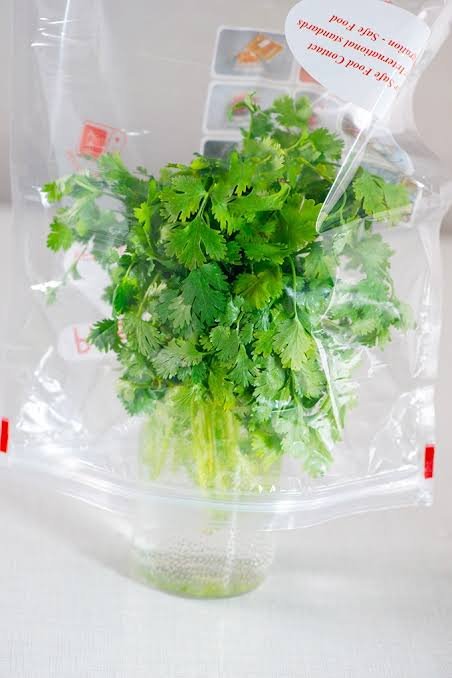
The best way to keep coriander fresh in the fridge for 2 weeks is to trim the stems, place the bunch upright in a jar with 1–2 inches of water, loosely cover the leaves with a plastic bag or reusable produce bag, and keep it in the fridge. Change the water every 2–3 days and remove any yellow or spoiled leaves. For Indian summers, this jar method usually works better than leaving coriander loose in the vegetable drawer.
Coriander is often called cilantro in international food guides. When grown for leaves, the plant is commonly called cilantro; when used for seeds, it is often called coriander. In Indian kitchens, we usually call the fresh leaves coriander or dhania. (NDSU)
Why Coriander Wilts So Quickly
Before learning how to keep coriander fresh in fridge for 2 weeks, it helps to understand why dhania spoils so fast.
Coriander leaves are delicate. They have thin stems, soft leaves, and high moisture content. Once the bunch is cut from the plant, it slowly starts losing water. That is why the leaves droop and become limp.
The second problem is excess moisture. If coriander is washed and stored while still wet, the trapped water can make the leaves rot faster. This is why many people see black patches, slimy stems, or a bad smell inside the storage box.
The third issue is fridge airflow. If coriander is thrown directly into the vegetable drawer, it may dry out. If it is packed too tightly in plastic, it may sweat. Both situations reduce freshness.
So the secret is balance. Coriander needs a little hydration, a little airflow, and protection from excess moisture.
Should Coriander Be Washed Before Storing?
This is the biggest confusion in Indian kitchens. Should you wash coriander before storing it or only before using it?
The safest answer is: do not wash coriander before storage unless it is very muddy. Wash it just before use.
Food safety guidance generally recommends washing produce under running water before preparing or eating it, and avoiding soap, detergent, or commercial produce wash. The FDA also advises drying produce after washing with a clean cloth towel or paper towel. (U.S. Food and Drug Administration)
For storage, however, washing too early can be a problem. A Colorado State University Extension guide notes that washing produce before storing may promote bacterial growth and speed up spoilage, so it is often better to wash fruits and vegetables just before use. If you do wash before storing, dry it thoroughly first. (Nation Institute of Food and Agriculture)
For Indian coriander, follow this simple rule:
If the coriander is mostly clean, remove spoiled leaves and store it unwashed. Wash only the amount you need before cooking.
If the coriander is full of mud, rinse it gently, dry it completely on a towel, and then store it. Do not store dripping-wet coriander in a closed box.
Method 1: Jar Method with Stems in Water
This is the best method if your goal is how to keep coriander fresh in fridge for 2 weeks.
Think of coriander like a mini bouquet. Just like flowers stay fresh when their stems sit in water, coriander also stays fresh when the stems can drink water.
What You Need
A glass jar, steel tumbler, or small bottle
Fresh coriander bunch
Clean water
Loose plastic bag or reusable produce bag
Kitchen scissors or knife
Steps
First, open the coriander bunch and remove yellow, black, or rotten leaves. Do not skip this step because one bad leaf can spoil the whole bunch.
Next, trim 1–2 cm from the bottom of the stems. This fresh cut helps the stems absorb water better.
Fill a jar with 1–2 inches of clean water. Do not fill the whole jar. Only the stem ends should sit in water. The leaves should stay above the water.
Place the coriander upright in the jar, like flowers in a vase.
Cover the leaves loosely with a plastic bag. Do not tie it tightly. The cover helps maintain humidity but still allows some airflow.
Keep the jar in the fridge door or a stable corner of the fridge where it will not fall.
Change the water every 2–3 days. Also remove any spoiled leaves whenever you see them.
Why This Works
The stems keep absorbing water, so the leaves do not dry out quickly. The loose cover protects the leaves from fridge dryness. This method is especially useful in Indian homes where coriander is used daily but not always finished in one or two days.
For many households, the jar method is the most reliable answer to how to keep coriander fresh in fridge for 2 weeks.
Method 2: Paper Towel Method for Coriander Leaves
The paper towel method is ideal if your fridge is small or you do not want to keep a jar inside.
North Dakota State University Extension recommends wrapping fresh cilantro leaves loosely in a slightly damp paper towel, then placing them in a plastic storage bag and refrigerating. (NDSU)
What You Need
Fresh coriander
Kitchen paper towel or clean cotton cloth
Zip pouch, produce bag, or airtight box
Steps
Remove damaged leaves and thick rubber bands from the bunch.
Do not wash the coriander unless necessary. If you wash it, dry it very well first.
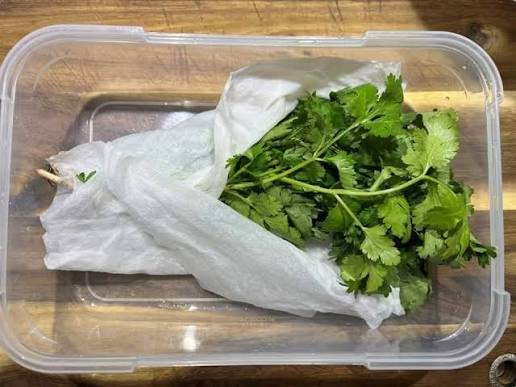
Spread the coriander loosely on a paper towel. The towel should be slightly damp, not wet.
Wrap the coriander gently. Do not press it tightly.
Place the wrapped bunch in a zip pouch, produce bag, or container.
Keep it in the vegetable drawer of the fridge.
Check after 3–4 days. If the paper towel becomes too wet, replace it.
Best For
This method is perfect for people who buy one small bunch of coriander and use it through the week. It keeps the leaves hydrated but absorbs extra moisture at the same time.
The paper towel method may not always keep coriander fresh for a full 2 weeks in peak Delhi, Mumbai, Chennai, or Ahmedabad summers, but it can easily extend freshness compared to storing coriander loose.
Method 3: Airtight Box Method
The airtight box method is very popular in Indian kitchens because it is neat, simple, and fridge-friendly.
This method works best when coriander is completely dry. If there is moisture inside the box, the leaves can become slimy.
What You Need
A clean airtight container
Paper towel or soft cotton cloth
Fresh coriander
Steps
Sort the coriander and remove spoiled leaves.
Spread a paper towel at the bottom of the box.
Place the coriander loosely inside. Do not stuff too much.
Add another paper towel on top.
Close the lid and refrigerate.
Every 2–3 days, open the box and check for moisture. Replace the paper towel if it feels wet.
Best For
The airtight box method is good for chopped coriander or small bunches. It also works well when you want coriander ready for quick cooking.
However, if you are serious about how to keep coriander fresh in fridge for 2 weeks, the jar method usually performs better because the stems stay hydrated.
Which Method Works Best in Indian Summers?
Indian summers are tough on fresh herbs. The coriander bunch travels from mandi to vendor to home, often in heat and dust. By the time it reaches your kitchen, it may already be slightly stressed.
For hot Indian weather, the jar method works best.
Here is a simple comparison:
| Method | Best For | Freshness |
|---|---|---|
| Jar method | Whole bunch with stems | Up to 2 weeks with water changes |
| Paper towel method | Weekly use | Around 7–10 days |
| Airtight box method | Small bunch or chopped coriander | Around 5–8 days |
| Freezing | Cooking, chutney, gravies | Longer storage, but texture changes |
If you live in a very hot city, always buy coriander early in the morning when possible. Choose bunches with bright green leaves, firm stems, and no slimy patches. Avoid coriander that already smells sour or has black leaves.
Also, do not keep coriander near the back wall of the fridge where it may freeze. Herbs need cooling, not ice damage. Perishable herbs should be stored in a clean refrigerator at 40°F or below, which is about 4°C. (U.S. Food and Drug Administration)
How to Revive Wilted Coriander
Sometimes coriander is not spoiled; it is just thirsty. If the leaves look limp but are still green and do not smell bad, you can revive them.
Ice Water Method
Take a bowl of cold water.
Add a few ice cubes.
Dip the coriander leaves and stems in the water for 10–15 minutes.
Remove and dry gently on a towel.
The leaves will usually become fresher and firmer.
Stem-Trim Method
If the stems look dry, trim the bottom ends and place the bunch in a jar of water for 30–60 minutes. This works well when coriander has wilted due to dehydration.
When Not to Revive
Do not try to save coriander if it is slimy, black, mushy, or smells rotten. Throw it away. Fresh herbs should smell clean and green. If the smell is unpleasant, it is not worth using.
Can Coriander Be Frozen?
Yes, coriander can be frozen. But remember one thing: frozen coriander will not look like fresh coriander after thawing.
It is great for chutney, dal, curry, soup, pulao, marinades, and gravies. It is not ideal for fresh garnish on poha, chaat, raita, or salad because the leaves become soft after freezing.
NDSU Extension suggests freezing cilantro in an airtight freezer bag, or chopping it and freezing it in ice cube trays with water for later use in soups or stews. (NDSU)
How to Freeze Coriander
Wash the coriander well under running water.
Dry it completely.
Chop it roughly.
Add the chopped coriander to an ice cube tray.
Pour a little water over it.
Freeze.
Once frozen, remove the cubes and store them in a freezer bag or box.
Use one cube directly in dal, curry, sambhar, rasam, soup, or chutney.
You can also blend coriander with green chilli, ginger, garlic, and lemon juice to make a quick chutney base. Freeze it in small portions and use whenever needed.
How to Store Chopped Coriander
Chopped coriander spoils faster than whole coriander because cutting exposes more surface area to air and moisture.
If you must chop in advance, follow this method:
Wash and dry the coriander completely.
Chop only after it is dry.
Line an airtight box with paper towel.
Add chopped coriander.
Place another paper towel on top.
Close the lid and refrigerate.
Use within 2–3 days for best flavour.
For the freshest taste, it is always better to store coriander whole and chop only when needed.
How to Use Leftover Coriander Stems
Please do not throw away coriander stems. In Indian cooking, the stems often have more flavour than the leaves.
You can use leftover stems in chutney, dal tadka, vegetable stock, soup, pulao, biryani masala, marinades, green masala paste, and coriander-garlic paste.
For chutney, use both leaves and tender stems. The stems add freshness and body. For dal or curry, finely chop the stems and add them while cooking. They release flavour beautifully.
You can also blend stems with ginger, garlic, green chilli, lemon juice, and salt to make a quick green masala. Store it in the fridge for 2–3 days or freeze it in small portions.
Using coriander stems reduces kitchen waste and gives you full value for the money you paid.
Common Mistakes That Spoil Coriander Faster
The first mistake is storing coriander in the same plastic bag from the vendor. That bag often has moisture, mud, and crushed leaves.
The second mistake is washing coriander and putting it directly into a box without drying. This creates the perfect condition for slimy leaves.
The third mistake is tying the bunch too tightly. Coriander needs some breathing space.
The fourth mistake is keeping coriander near fruits that ripen quickly, or near strong-smelling foods. Herbs absorb smells easily.
The fifth mistake is ignoring spoiled leaves. Remove yellow or black leaves as soon as you see them.
Once you avoid these mistakes, learning how to keep coriander fresh in fridge for 2 weeks becomes very easy.
Best Indian Kitchen Method: Final Verdict
If you want coriander to stay fresh for the longest time, use the jar method with stems in water.
If your fridge has limited space, use the paper towel method.
If you want coriander ready for quick cooking, use the airtight box method, but make sure the leaves are completely dry.
If you bought too much coriander, freeze some for gravies and chutneys.
For most Indian homes, the best routine is this:
Keep one bunch in a jar for daily use.
Keep extra coriander wrapped in paper towel.
Freeze leftover stems and leaves for chutney or curry.
This way, you get fresh coriander for garnish and preserved coriander for cooking.
FAQs
1. How to keep coriander fresh in fridge for 2 weeks?
To keep coriander fresh in fridge for 2 weeks, trim the stems and place the bunch upright in a jar with 1–2 inches of water. Cover the leaves loosely with a plastic bag and refrigerate. Change the water every 2–3 days and remove spoiled leaves.
2. Should I wash coriander before storing it?
It is better not to wash coriander before storing unless it is very muddy. Wash it just before use. If you wash before storing, dry it completely with a clean towel or paper towel.
3. Why does coriander become slimy in the fridge?
Coriander becomes slimy when there is excess moisture, poor airflow, or spoiled leaves trapped inside the bunch. Wet coriander stored in a closed container spoils faster.
4. Which is better: jar method or paper towel method?
The jar method is better for keeping coriander fresh for up to 2 weeks. The paper towel method is easier for small fridges and usually keeps coriander fresh for around a week or slightly more.
5. Can I store coriander in an airtight container?
Yes, you can store coriander in an airtight container, but it must be dry. Line the container with paper towel to absorb moisture and replace the towel if it becomes wet.
6. Can coriander be frozen?
Yes. Wash, dry, chop, and freeze coriander in an airtight freezer bag or ice cube tray with water. Frozen coriander is best for dal, curries, soups, chutneys, and gravies.
7. How do I revive wilted coriander?
Soak wilted coriander in ice water for 10–15 minutes, then dry gently. If the stems are dry, trim the ends and place them in water for 30–60 minutes.
8. Can I use coriander stems?
Yes, coriander stems are full of flavour. Use them in chutney, dal, curry, soup, stock, marinades, and green masala paste.
9. Why does coriander turn black?
Coriander may turn black due to excess moisture, cold damage, spoilage, or old leaves. Remove black leaves immediately to protect the rest of the bunch.
10. What is the best container for coriander storage?
For long storage, a glass jar with water works best. For compact storage, use a paper towel and zip pouch. For chopped coriander, use an airtight box lined with paper towel.
Conclusion
Coriander may look delicate, but with the right storage method, it can stay fresh much longer than most people expect. The main trick is to control moisture. Too little moisture makes coriander wilt. Too much moisture makes it rot.
For Indian kitchens, the jar method is the best answer to how to keep coriander fresh in fridge for 2 weeks. Trim the stems, keep them in a little water, cover the leaves loosely, refrigerate, and change the water every few days.
Once you start doing this, you will waste less dhania, save money, and always have fresh coriander ready for dal, sabzi, chutney, poha, paratha, chaat, and every dish that needs that final green touch.
See Also
Practical Guide on How to Store Fresh Coriander in Fridge for 30 Days
How To Keep Coriander Leaves (Cilantro) FRESH FOR WEEKS
Does Hing Expire? How to Store Asafoetida Without Losing Its Aroma
How to Store Curry Leaves in the Fridge: Keep Kadi Patta Fresh for Weeks